
Winterizing pipes and hose bibs in Eagle before the first hard freeze
Treasure Valley nights reach 32 degrees F or lower on about 4 days in a typical October and 16 in November. Here is a short, sourced list for hoses, outdoor faucets, exposed pipes and the main shutoff.
Checked 30 Oct 2026
When freezing nights usually begin
The National Weather Service calls 32 degrees F or colder a freeze, and 28 degrees or colder held for an extended period a hard freeze. NOAA's 1991-2020 normals for the Boise Airport weather station show a low at or below 32 degrees on 0.2 days in an average September, 3.7 days in October and 16.3 days in November.
By December the pattern changes. A low at or below 32 degrees happens on 25.2 days in an average December, and a low at or below 20 degrees on 9.2 of them. Eagle's own readings can differ from the airport's, so use these numbers as a guide and not as a forecast for your street.
The practical point is that the work should be done in October, before the first freezing night, and not when the first cold forecast arrives.
Hoses and outdoor faucets come first
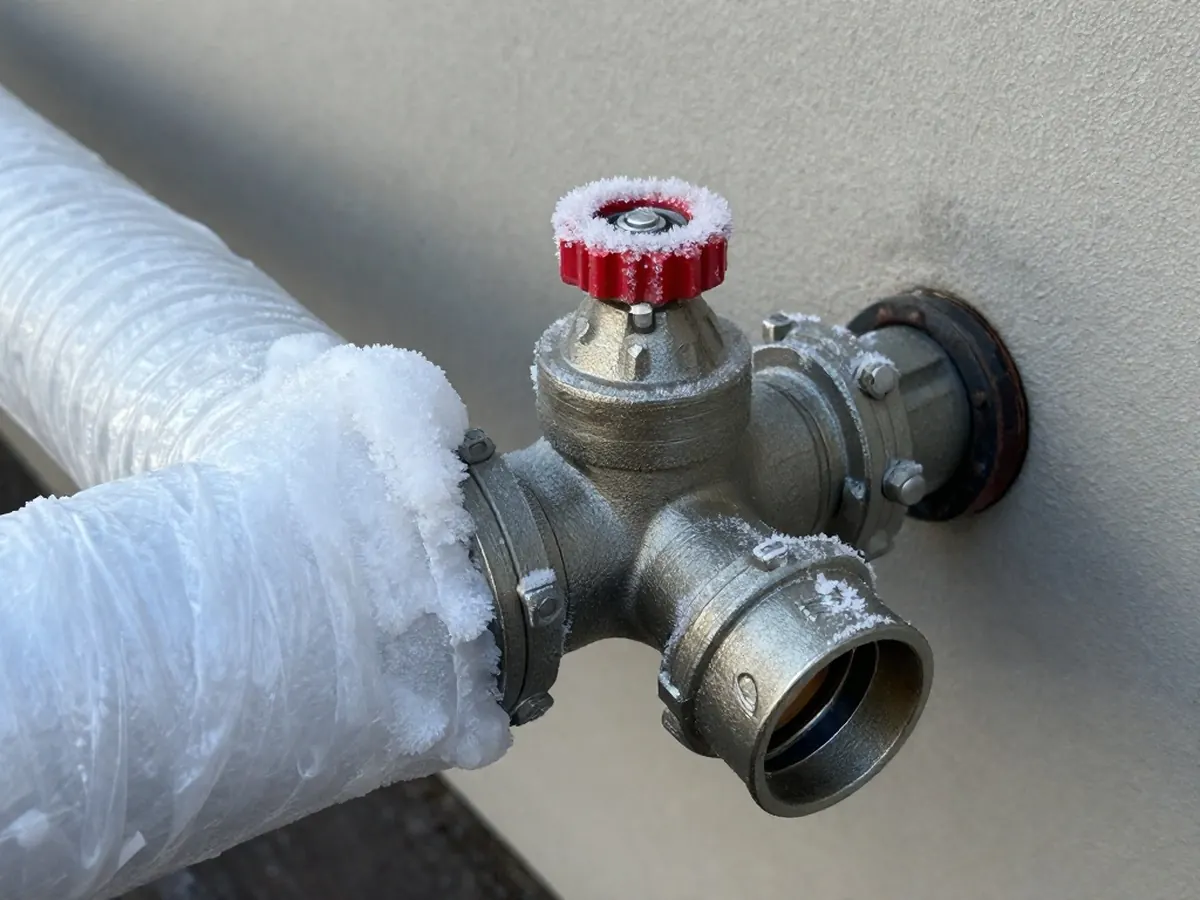
FEMA's winter checklist is short: drain outdoor garden hoses, disconnect them from the faucets and cover the faucets. A hose left on keeps water inside the faucet and the pipe behind it, which is why the advice is to take it off.
Idaho's amended plumbing code asks for more at the outlet itself. For hose outlets in climates where freezing temperatures occur, it calls for a listed self-draining frost-proof hose bibb. The rule is written for installations, so an older faucet at your house may not be that type. A plumber can tell you what you have and whether it is worth replacing.
Leave the hose off even if the faucet is the frost-proof kind. Lawn sprinkler systems have their own drain and shutoff steps, so ask whoever installed yours.
Exposed pipes and cold spots indoors
The National Weather Service recommends insulating water supply lines that run through unheated areas such as basements, crawl spaces, attics and garages. It also advises caulking cracks and holes in outside walls and foundations near water pipes.
On very cold nights, the National Weather Service suggests leaving cabinet doors open under kitchen and bathroom sinks and letting taps drip. The cabinet doors let room air reach the pipes. The drip keeps water moving and relieves pressure between a frozen spot and the faucet.
Walk through the house on a mild day and note where pipes run through garages, crawl spaces and exterior walls. Look only at what you can see from the floor without moving insulation. If lines run where you cannot see them, ask a plumber.
Keep the heat on and learn the main shutoff
FEMA advises keeping the furnace at 55 degrees F or higher so the home stays above freezing. The National Weather Service gives the same 55-degree minimum for homes left empty.
FEMA also says to learn how to shut off the main water valve in case of an emergency, and notes that leak sensors and automatic shutoffs can limit the damage from a burst pipe. Find the valve now, tag it and make sure everyone in the house can close it.
In Eagle, the water provider depends on your street. The City of Eagle Water Department lists an emergency number of 208-994-9443, and Veolia serves separately designated areas of Eagle at 208-362-7304. Ask the utility which valve you are expected to operate and which one is theirs.
If a pipe freezes anyway
Open the tap on the frozen line a little. The National Weather Service says an open faucet relieves pressure that builds between the faucet and the ice. Keep the room warm and look along the pipe for any wet spot.
The National Weather Service is direct on one point: if pipes freeze, do not try to thaw them with a torch. Open flame near framing, insulation and a pipe full of water is a fire and burn risk.
A pipe can crack while it is frozen and begin leaking only when the ice melts, so keep the main valve within reach as it thaws. If you see water, close the main valve and call a plumber. Repairing a leak does not need a plumbing permit in Idaho under Idaho Code 54-2621, unless the work rearranges pipes.
A short fall checklist
Before the first freezing night: disconnect and drain every hose, cover or replace outdoor faucets that are not frost-proof, insulate exposed supply lines in garages and crawl spaces, and seal air gaps near pipes.
On cold nights: open the sink cabinet doors on exterior walls, let a tap drip on lines that run through cold spaces, and keep the thermostat at 55 degrees F or higher.
Always: know where the main shutoff is, keep a plumber's number where everyone can find it, and never use a torch on a pipe.
When is a frozen pipe more than a DIY job?
Draining hoses, covering faucets and insulating pipes protect most homes. They stop being enough when a tap runs dry and you cannot find the cold spot, when a pipe looks swollen or when a wall gets wet after a thaw. Never use a torch. Water can pour out once the ice melts.
Read about frozen and burst pipes or leak repair to see what a visit covers. When a pipe splits or a tap will not run, call (208) 781-4118 because a local contractor can check the line before the damage spreads.